
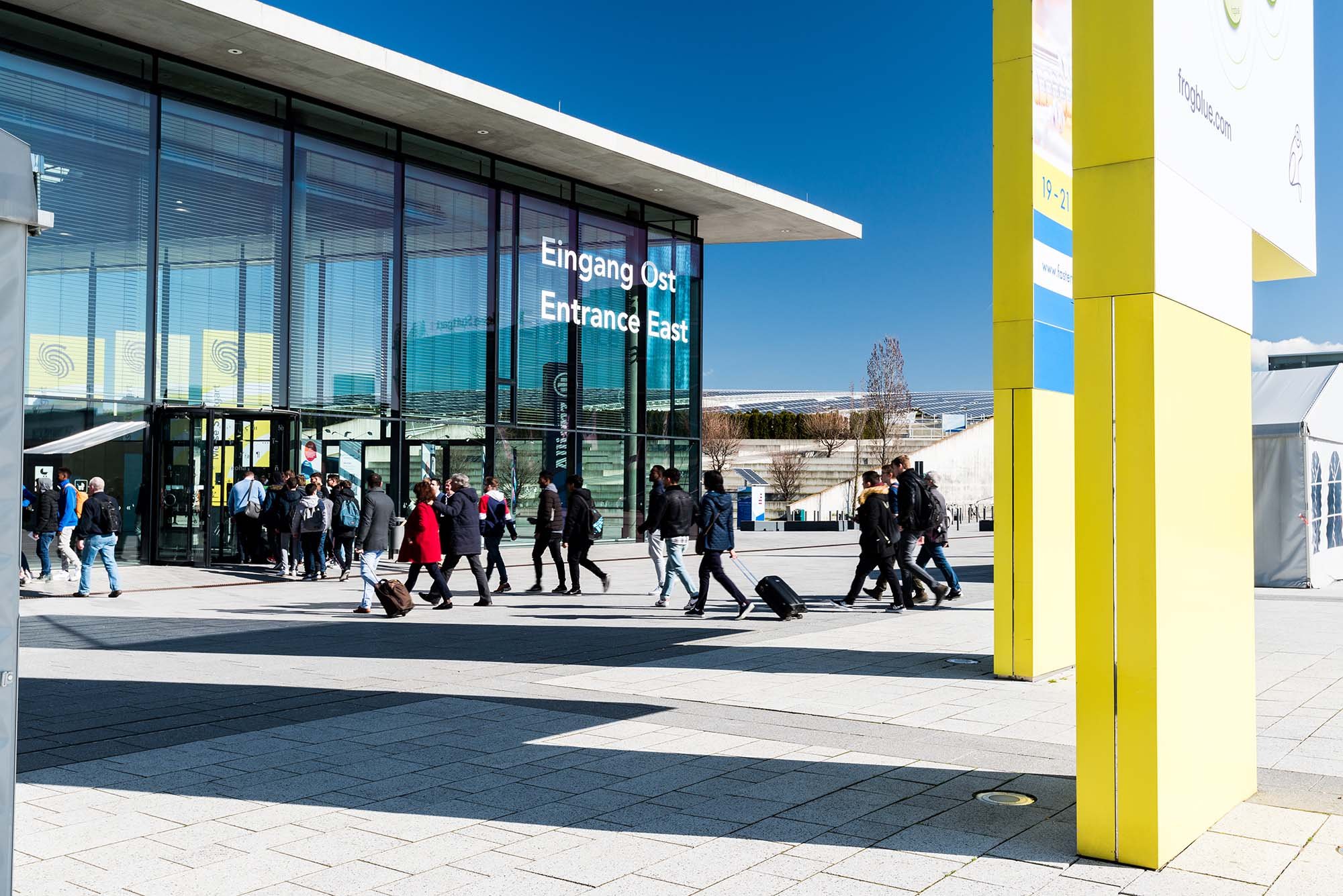
Spotlight on precision: New trade fair "Make-to-Order Days" will première in Stuttgart in 2026
Make-to-Order Days (MTO Days), a new trade fair format for precision parts, contract manufacturing and machining, will make its début at the Stuttgart Trade Fair Center on 9 and 10 June 2026. A key industrial sector, which has been confronted with enormous pressure for innovation and adaptation for many years, will then have its own procurement fair for the first time.
The new buyers' trade fair is specifically aimed at decision-makers and buyers from future-oriented key industries – from traditional mechanical engineering and automotive technology through to defence, robotics and renewable energies. The focal point will be contract-based precision manufacturing whose importance for global value-added chains is growing continuously. "Technological changes, geopolitical challenges and the transformation of entire branches of industry are posing great challenges to many manufacturing companies. With Make-to-Order Days we are creating a platform which will react precisely to these changes – closely geared towards the needs of the industry and with a clear focus on the future," said Roland Bleinroth, President of Messe Stuttgart.
Clear message from the machining sector: backbone of industry as the focal point
According to the Machining Technology Cluster, the distinct positioning is paramount. "As an important economic factor, we are permanently striving towards innovative developments, new economic spheres, additional business areas and future-oriented technologies. In our capacity as the partner of the new buyers' trade fair MTO Days in Stuttgart, we are offering our members ideal conditions and opportunities in this respect," emphasized Ingo Hell, Chairman of the Executive Committee of the Machining Technology Cluster.
The partner associations have also welcomed the new trade fair format. Werner Liebmann, Managing Director of the German Turned Parts Industry Association, emphasized: "Make-to-Order Days will give our industry an important platform. Contracted-based manufacturing is the backbone of a large number of key industries – and will attract the necessary attention and networking through this format."
"Messe Stuttgart has been a reliable partner for our Association for many years – and the conditions for Make-to-Order Days are ideal, especially in the strong industrial area of Baden-Württemberg with its superb infrastructure. Contracted-based manufacturing has always been an important area of activity for toolmakers since their day-to-day business includes all competencies and high-end precision. We are therefore impressed by the trade fair concept: MTO Days provides an opportunity to present the offered services on a professional platform. We are pleased to act as a partner and will support this strong format with full conviction." Ralf Dürrwächter, Managing Director of the Association of German Tool and Mold Makers
Value-added through synergies: three trade fairs to be held concurrently
One special advantage: Make-to-Order Days will be held concurrently with CastForge, International Trade Fair for Castings and Forgings with Processing, and The Battery Show Europe. This will produce valuable synergies for exhibitors and visitors alike. Especially in associated fields of technology in which precise manufacturing plays a key role, new points of contact and interdisciplinary discussion opportunities are being created.
Clear structures for maximum visibility
Make-to-Order Days offers exhibitors a unique and clearly structured stand concept which is aimed specifically at efficient business initiation. Thanks to detailed service specifications with information about application areas, production processes, materials, certifications and batch sizes, potential customers can identify suitable suppliers beforehand and ideally prepare their attendance at the trade fair leading to precisely the right connections for sustainable business in addition to the welcome random trade fair contacts. Another highlight is the stand construction concept with all-inclusive packages: a uniform, modern design ensures equality and discretion among all exhibitors. Along with organizational support, service and communication measures are also integrated. Exhibitors can therefore concentrate on everything that really matters – business initiation with the right partners.
Accompanying program with the emphasis on practice
In addition to the traditional product exhibition, the new trade fair format focuses on knowledge transfer and networking. A technical forum will examine key topics in the areas of digitalisation, precision and manufacturing trends in a practical manner. The networking area and separate meeting rooms will provide ideal conditions for personal discussions, confidential negotiations and business transactions.
Registration is now possible
Exhibitors can now register for Make-to-Order Days 2026. Registration is easy via the official event website (www-mto-days.de) of Messe Stuttgart. Interested parties can find there all important information relating to stand packages, participation opportunities and the accompanying programme. Booking early will not only secure a place at the première, but also the benefits of high visibility and reach of the new trade fair.
Mechanical exports exceed 20 billion euros in the first half of the year
The figures presented at Anima Export Days 2026: +2.8% compared to the same period last year. Exports are growing in the USA, China, and Germany. Exports of the mechanical engineering sector represented by Anima Confindustria reached €20.4 billion in the first half of 2026, up 2.8% compared to the same period in 2025. The data, processed by Anima's Statistics Office based on Istat data, were presented during the Brescia leg of Anima Export Days , the initiative dedicated to the internationalization of the Italian mechanical engineering sector. Running from September 28th to October 1st, the event is bringing together companies in the sector with selected international buyers. Now in its sixth edition, the Export Days are a collaboration between Anima Confindustria, the Ministry of Foreign Affairs and International Cooperation (MAECI), and the Italian Trade Agency (ITA), with the aim of fostering new trade relations and supporting the strengthening of Italian companies' presence in foreign markets . This year, the B2B meetings involve operators from over 20 countries and are taking place in four locations : Borgosesia, Turin, Brescia, and Bassano del Grappa. The initiative comes at a time when geopolitical tensions and uncertainties over trade policies continue to impact international trade. Against this backdrop, data for the first half of 2026 paint a resilient picture for the mechanical engineering sector, represented by Anima. Exports from Anima's sectors totaled €20.4 billion , up 2.8% from €19.8 billion in the same period in 2025. The trend confirms the sector's strong international vocation , albeit with varying trends. The main export components include valves and faucets , gas turbines, hydraulic pumps, and air conditioning systems. Other sectors are showing positive results, while others are experiencing a decline. Geographically, the United States remains the leading destination market for exports in the animal and animal sectors, with €2.38 billion in the first six months of 2026, up 2.4% compared to the same period of the previous year. Germany follows, with €1.99 billion (+4.8%), and France, with €1.81 billion (+2.9%). Alongside the more established European markets, some particularly significant trends are emerging in non-EU areas, starting with China, the Middle East, and North Africa. Despite a general decline towards the Gulf countries (-3.7%), exports to Saudi Arabia grew by 14.6% (665.1 million euros) , supported by the sectors related to process plants, energy, infrastructure and cooling. In China , exports of the Anima sectors grew by 22.3% and reached almost 720 million euros . The aeraulic systems sector was the main driver of this increase. Steam turbines and air compressors also recorded good growth in China. Algeria's growth was even more significant, rising 146.7% from €173.3 million to €427.6 million. This result was primarily driven by technologies such as gas turbines (which account for approximately 47% of total exports to the country), valves and taps, as well as pressure products and equipment. These flows are often tied to individual orders and therefore not necessarily characterized by continuous trends, but the data highlights the ability of Italian companies to seize opportunities even in rapidly developing markets. "The 2.8% growth in exports in the first half of the year confirms the ability of Italian mechanical engineering to maintain a competitive position on international markets, even in a period characterized by geopolitical tensions and trade uncertainty. The United States remains the primary destination market, while the results in China and Algeria demonstrate the ability of companies to seize opportunities in different markets. This is a sign of resilience that must be accompanied by greater diversification and a strengthened international presence. In this regard, the Export Days represent a concrete tool for creating new relationships and business opportunities," stated Pietro Almici, president of Anima Confindustria . On the import front, in the first six months of the year, the Anima sectors recorded a 1.2% increase, for a total value of 9.73 billion euros; this figure completes the current trade picture and confirms the centrality now assumed by international markets beyond the European one. It is in this context that Anima is renewing its Export Days , transforming market analysis into a concrete opportunity for supply and demand to meet.
 Industriale.it certification