
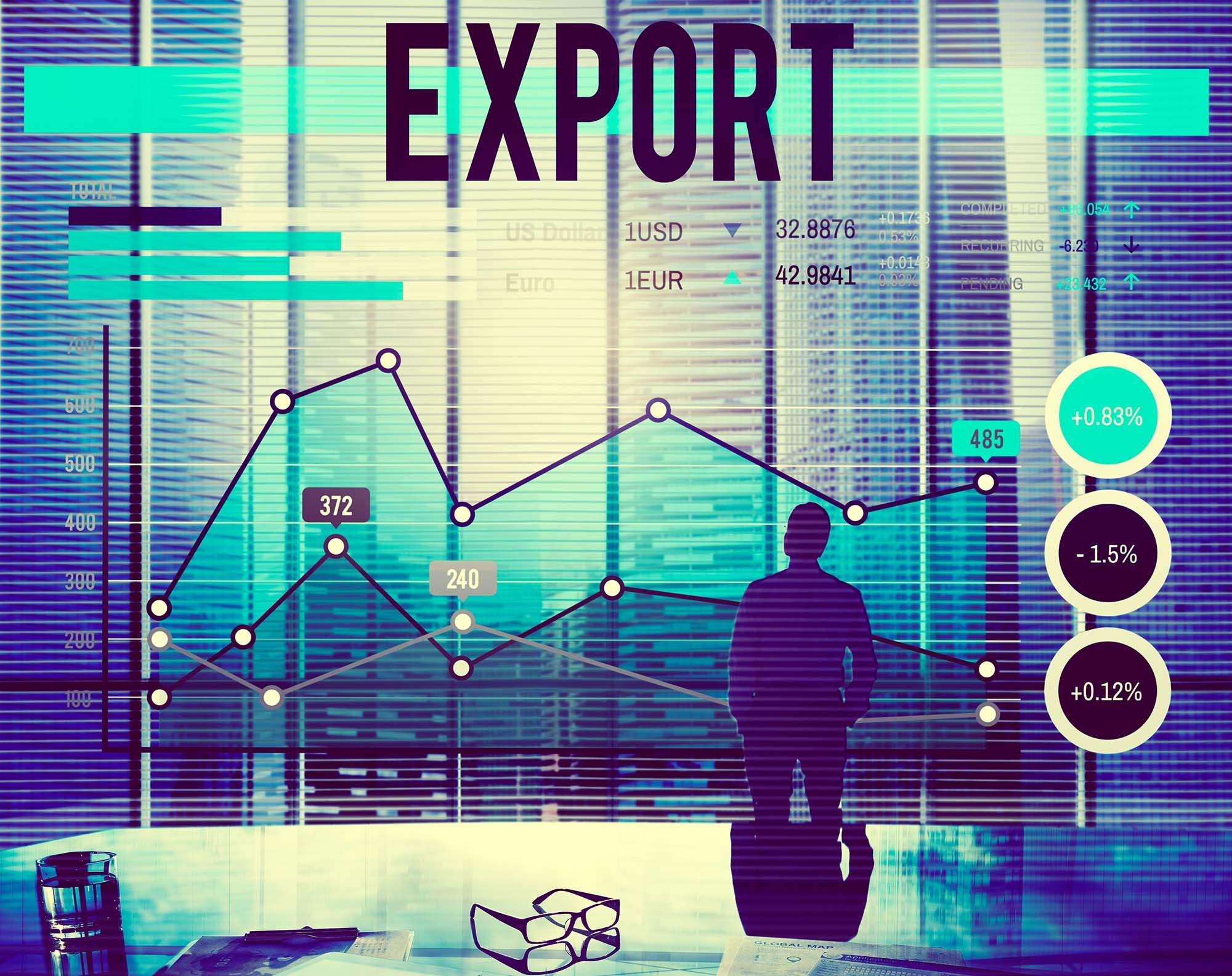
Anima data show marginal growth (+0.4%), highly polarized sectors, and competitive pressure from abroad
The first half of 2025 closed with overall exports of Italian mechanical engineering substantially stable, recording marginal growth of 0.4% (for a total of 19.84 billion euros) compared to the same period in 2024. This figure portrays a resilient sector but also a picture of growing uncertainty, with highly polarized percentage performances that reveal some sectors experiencing strong expansion and others in sharp contraction. These are the main findings emerging from the analysis conducted by the Statistics and Market Intelligence office of Anima Confindustria on data for the first half of the year.
The mechanical engineering sector continues to confirm its vocation for export, with approximately 60% of production destined for foreign markets. Nonetheless, the first-half data highlight contrasting trends that require particular attention.
Among the sectors that recorded the best performances, hydraulic and steam turbine manufacturers stand out, followed by commercial refrigeration equipment, which grew strongly with a 20.8% increase compared to the first half of 2024 (equal to €407 million in exports). Industrial ovens are in third place, with a 12.5% increase, as well as bakery machinery and ovens, which recorded an excellent +9.2%. The valves and faucets sector confirmed solid growth, remaining a pillar of Italian exports with over €3 billion (+4.6%).
On the other hand, the sectors experiencing the greatest difficulties showed significant contractions. Industrial forklifts suffered the sharpest decline, falling 20.2% from €1.31 billion to €1.05 billion. Internal combustion engines also recorded a sharp contraction of -19.7%, likely reflecting the ongoing transition to electric solutions and alternative energy sources.
On the international market front, in the first half of 2025, the United States confirmed its position as the leading destination (€2.3 billion in total), partly due to the increase in orders from overseas companies in recent months – with the aim of stockpiling ahead of the full implementation of the new tariffs. Precisely because of the tariffs, serious concerns remain for many mechanical engineering sectors starting in the second half of this year.
Germany, while remaining the second largest market for Italian exports (€1.87 billion and -3.3%), continues to show signs of weakness, confirming a negative trend that has now persisted for several quarters. France also shows increasing fragility (-6.3%), with marked contractions in various sectors, highlighting how economic and political instability is weighing on domestic industrial demand. Nonetheless, several Italian mechanical engineering companies have demonstrated their ability to diversify geographically, finding outlets in non-European markets – especially in Saudi Arabia and the United Arab Emirates. In Europe, exports to Spain have grown significantly (+13.1%), rising to fourth place among Anima mechanical engineering destinations, with a total of €934 million.
On the import front, data show significant overall growth of 6.7%, signaling growing competitive pressure from foreign suppliers. Particularly notable is the trend in aeraulic systems, whose imports increased by 26.9%, and in bakery machinery and ovens: +109% compared to last year. Household goods also saw an explosion in imports (+32.6%).
"The results of the first half of the year confirm that the Italian mechanical engineering industry, compared to the first half of 2024, has maintained substantial stability, once again demonstrating its resilience and ability to adapt," states Pietro Almici, president of Anima Confindustria."This figure, while positive in a complex international context, highlights a halt in growth. In recent years, the Italian mechanical engineering industry has demonstrated extraordinary strength and rebound ability, successfully diversifying its outlet markets even in critical moments. However, geopolitical tensions, the issue of US tariffs, the weakening of its main European partners, and growing competitive pressure from abroad generate uncertainty for the future. While maintaining its structural solidity, the mechanical engineering industry is facing increasingly pressing challenges. The ability demonstrated by Italian companies to maintain good positions on global markets is a positive element, but the situation requires constant attention and structural interventions to protect the competitiveness of a strategic branch for the entire national economy, without forgetting the social fabric implicitly involved. It is essential that national and European institutions support the sector with targeted industrial policies, promoting the competitiveness of companies and ensuring fair competition on international markets.
ANIMA Confindustria is the industrial trade organization that, within Confindustria, represents companies in the various and related mechanical engineering sectors, a sector that employs 221,700 people for a turnover of 55.5 billion euros and an export/turnover share of 59% (Anima Research Office data). The macro-sectors represented by ANIMA are: construction and infrastructure; material handling and logistics; food production; energy production; industrial production; safety and the environment.
“90 minutes with...” at 35.bi-mu the two forums on aerospace & defense and energy
35.BI-MU – the leading Italian event dedicated to the industry manufacturing metal-cutting and metal-forming machine tools, robots, automation, digital and additive manufacturing, auxiliary and enabling technologies – will, as per tradition, combine the exhibition offering with a program of meetings and thematic insights aimed at operators attending the fair, hosted on October 14th and 15th in the BI-MUpiù arena . Throughout the exhibition, from 13 to 16 October at Fieramilano Rho , the pavilions will host one-on-one discussions, performances, cultural insights and conferences dedicated to the sector. The heart of this program will be the BI-MUpiù events arena (Hall 24, Stand C47), which this year, among other initiatives – curated by the organizers and exhibitors – will host two thematic forums dedicated to some of the most dynamic sectors in terms of investment and innovation: Aerospace & Defense and Energy , scheduled for Wednesday 14 and Thursday 15 October respectively. Thanks to these Forums, BI-MU will broaden its horizons and will be able to offer operators present at the fair, through the direct voice of some production operations directors of leading companies in these sectors, a timely discussion on the technologies needed today and for the future: the most interesting business opportunities for exhibitors . The events will feature discussions between representatives of some of the leading large, medium, and small businesses, covering the broad spectrum of companies in the key sectors involved. “90 minutes with the world of Aerospace & Defense” is the title of the first Forum scheduled for Wednesday, October 14th at 10:00 a.m. Speakers at the meeting will include Carlo Fenoglio , Executive Manufacturing Engineer Management at Avio Aero; Tiziano Pegorin , Director of the Turin plant at Thales Alenia Space; Carmine Schips , General Manager of OMA; Valentina Pedretti , Member of the Board of Directors of PMP; and Luca Carafa , General Manager of CARAFA. The second Forum, entitled “90 minutes with the world of Energy” , scheduled for Thursday 15 October at 10.00 am, will bring together Valerio Maffi , General Manager of Cavagna Group, Manuel Cortinovis , CEO of GFM, Alessandro Montagner , Commercial Director of BFR Meccanica, and Osvaldo Finazzi , President of Osvaldo Finazzi. The challenges facing the current era, the main production process needs of companies operating in these sectors, and the specific demands placed on production technology suppliers are some of the questions the guests at the two round tables will address. Participation in both Forums is free for all event visitors . The meetings will also be livestreamed on bimu.it.

 Industriale.it certification