From May 19th, overhead crane operator's license will be mandatory in all companies.

Yayınladı 19/05/2026
From May 19th, overhead crane operator's license will be mandatory in all companies.

Aisem: "There's a risk of production shutdowns for some companies. It's necessary to ensure more adequate time and effective training support tools."

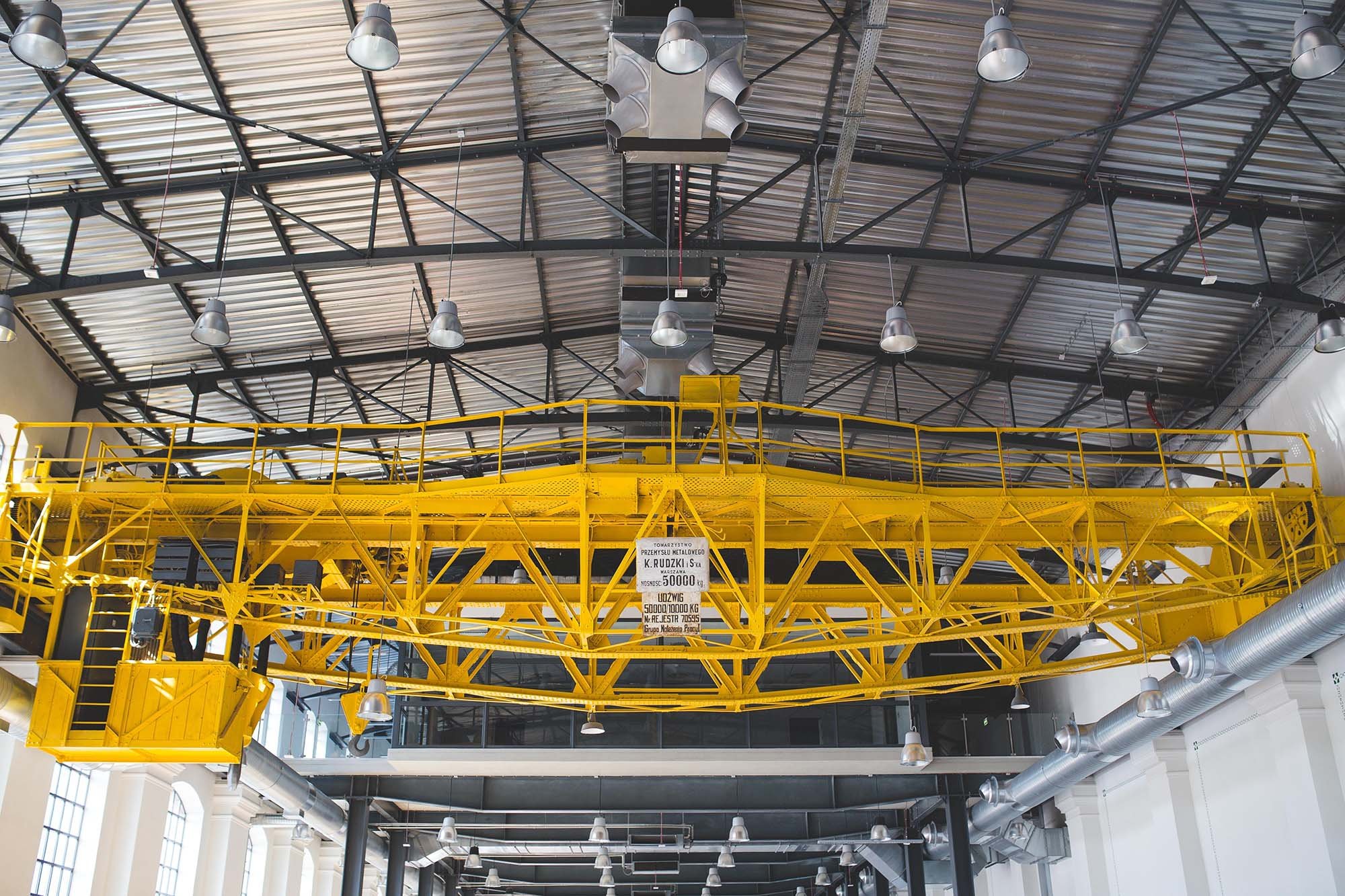
Starting May 19, overhead crane operators in Italy, a professional category employing over half a million people, will also be required to be trained in accordance with the 2025 State-Regions Agreement (ASR 2025). Without this training, required by specific regulations, it will be impossible to practice the profession. Incidentally, the Ministry of Labor lists the May 19 date on its website, although based on the publication date of the ASR 2025 in the Official Journal, compliance effectively begins on May 25. This discrepancy in dates is creating uncertainty among operators regarding safety, an issue on which uncertain interpretations should not exist.

Before the introduction of the new Agreement, training on the use of equipment such as overhead cranes was already required by the Consolidated Law on Occupational Safety (Legislative Decree no. 81/2008), but the choice of training program remained at the discretion of the employer . With the new Agreement, however, overhead cranes have been included in the list of work equipment for which specific, standardized, and predefined training is mandatory—both in content and in terms of hours—as is already the case, for example, for forklifts.

However, significant critical issues have emerged in the practical implementation of ASR 2025. The timeframe allowed for compliance has proven too short given the vast number of companies involved. According to estimates by AISEM , the Italian Association of Lifting, Elevation, and Handling Systems affiliated with Anima Confindustria, over 150,000 overhead cranes are currently in operation in Italy, each operated and managed by different operators within the company.

This creates a difficult-to-manage paradox: by law, all overhead cranes used by operators without adequate training, i.e., in line with the provisions of the ASR 2025, must be stopped, with serious operational repercussions for many companies.

AISEM President Massimiliano Bariola comments: "The introduction of mandatory licensing for overhead crane operators raises regulatory and institutional controversies. The distinction between the previously required training and the current mandatory requirement, with standards set by interinstitutional agreements, creates uncertainty and difficulties of interpretation for businesses. It should also be considered that some companies may not yet be aware of this new requirement, given the short timeframe between the announcement of the requirement and the entry into force of the regulation. Given the large number of operators involved ," Bariola continues, " AISEM had asked the institutions for at least five years to complete the training courses, but this request was not granted. It is therefore necessary for the competent authorities to collaborate to ensure more adequate time and effective training support tools, in order to reconcile safety and production continuity."

Matteo Frigo , lifting group leader within Aisem, emphasizes: "The operational difficulties in implementing mandatory training are evident and shared by the operators themselves. There is also a real risk of short-lived or poorly structured training courses being organized, which do not follow the correct required training path . We remind you that Aisem and its member companies are accredited training organizations , in full compliance with the provisions of the State-Regions agreement. At this time, open dialogue between regulatory bodies, companies, and trade associations is needed to prevent a measure designed to protect safety from becoming an obstacle to regular work activities. Aisem will continue to carefully monitor the evolution of the situation, confirming its commitment to complying with safety regulations and industrial development needs."

AISEM is the Anima federated association that brings together the best national businesses for the construction and distribution of material handling, lifting, and hoisting machinery. It represents over 80% of the entire national production, approximately 40% of which is exported.

ANIMA Confindustria is the trade organization within Confindustria that represents companies in the mechanical and related sectors, a sector that employs 224,000 people, generates a turnover of €59.1 billion, and will account for approximately 60% of exports in 2025 (Anima Research Office 2025 forecasts). The macro-sectors represented by ANIMA are: construction and infrastructure; material handling and logistics; food production; energy production; industrial production; and safety and environment.

Daha fazla bilgi için: Anima Confindustria

İlginizi çekebilecek diğer makaleler

Valvitalia group wins $30 million contract for us desert southwest gas pipeline

The order strengthens the order backlog, which has risen to €263 million. GOVERNANCE: GROUP'S CORPORATE BODIES RENEWED FOR THE NEXT THREE-YEAR PERIOD The supply concerns 94 large diameter valves that will be manufactured in the Rivanazzano Terme plant and that will be used for a new 840 km infrastructure that will connect Texas to New Mexico and Arizona. President Salvatore Ruggeri: "This award confirms our ability to participate in major international energy infrastructure programs and leverages the industrial know-how developed in Italy." Executive Vice President Massimiliano Ruggeri: "The Americas are an increasingly central market for the Group and offer interesting prospects for further growth in the medium to long term." The Valvitalia Group announces that it has been awarded a new contract valued at approximately $30 million for the supply of valves for the Desert Southwest project, one of the most significant energy infrastructure projects currently under development in the Southwest United States. The order concerns the production of 94 48-inch valves, which will be entirely designed and manufactured at the Rivanazzano Terme (PV) industrial site, confirming the central role of Made in Italy and the Group's technological expertise in the creation of highly complex solutions for major international energy projects. Delivery of the supply is scheduled for 2027. The order acquisition contributes to the growth of the Group's order book, which has risen to approximately €263 million, and further strengthens Valvitalia's positioning in the Americas, currently the Group's primary destination market. Overall, orders from North and South America account for over 37% of total bookings, confirming the continent's strategic importance for business development. To support its commitment in the region, the Group can also count on the presence of Valvitalia USA staff in Houston, Texas. Led by Massimiliano Ruggeri, the organization ensures stable coverage of the American market and supports Valvitalia's development efforts in a region of primary global importance. Salvatore Ruggeri , President of Valvitalia, commented: "Winning this important contract confirms the trust our clients place in the expertise, reliability, and quality of the solutions we design and implement. Participating in a strategic infrastructure project like Desert Southwest means making a concrete contribution to the energy development of a rapidly growing area and, at the same time, confirms our ability to successfully participate in major international infrastructure programs. This result enhances the wealth of expertise we have built over the years and the crucial contribution of our people. The quality of our order backlog allows us to look confidently to future growth prospects and confirms the validity of our path, supported by an increasingly qualified presence in energy markets with the greatest potential." Massimiliano Ruggeri , Executive Vice President of Valvitalia, stated: "This award is an important recognition of the work we've done over the years to consolidate our presence in the Americas and strengthen relationships with leading energy sector operators. The US continues to be a key market for Valvitalia and offers exciting development opportunities, supported by significant investments in energy infrastructure. At the same time, we are continuing our growth in South America, where we see favorable prospects for business expansion. The quality of the opportunities and ongoing dialogue with leading clients allow us to confidently look forward to the evolution of our presence in the region." Desert Southwest The US infrastructure, estimated at $5.6 billion, will extend for approximately 840 kilometers, connecting the Permian Basin, one of North America's most important hydrocarbon fields located between West Texas and New Mexico, to end-use markets in the southwestern United States, particularly Arizona and New Mexico. The pipeline's construction will meet the region's growing energy demand, supporting population growth and regional economic development. Dedicated Gas Pipeline Furthermore, among the most recent and significant opportunities in South America, there is the supply of valves for the Gasoducto Dedicado project in Argentina, a 480-kilometer gas pipeline under construction in the Province of Neuquén. The leadership of the group has been confirmed for the next three years. Valvitalia's Shareholders' Meeting and Board of Directors also renewed the Group's governing bodies for the three-year period 2026-2028, confirming the continuity of the governance that has accompanied the development and growth path of recent years. Salvatore Ruggeri was confirmed as President, Massimiliano Ruggeri as Executive Vice President, and Andrea Forzi as Chief Executive Officer. The new Board of Directors also includes Manuela Carra, Angela Colmellere, Paolo Rinaldi, and Manuela Sabbatini. Franco Gianni and Andrea Alghisi will also participate in the Board of Directors' meetings as observers. At the same time, the new Board of Statutory Auditors was appointed, composed of Micol Marisa as President, Annalisa Zanini and Giuseppe Galeano as effective Auditors. The renewal of these positions ensures strategic and managerial continuity for the Group at a time marked by a growing international presence and significant development opportunities in its key markets.

02/07/2026 Devamını oku

Ai in manufacturing: from pilot to practical application

Artificial intelligence as a central theme at AMB 2026 // Guido Reimann, VDMA, discusses opportunities, challenges and current developments At AMB, the international trade fair for metalworking, taking place in Stuttgart from September 15 to 19, 2026, Artificial Intelligence (AI) will be one of the three main topics, alongside automation and the circular economy. We discussed the progress made by the industry and the useful insights decision makers can draw from AMB 2026 with Guido Reimann. He is Deputy General Manager of VDMA Software and Digitalization and Coordinator of the VDMA Competence Network on Artificial Intelligence. AMB: AI was a hotly debated topic at AMB 2024. Where does the metalworking industry stand today, in 2026? Has AI become a standard practice, or are pilot projects still prevalent? Guido Reimann: For the mechanical and plant engineering sector in general, as well as for manufacturers of precision tools and machine tools, the topic of artificial intelligence has gained further importance. A VDMA survey in spring 2026 revealed that over 80% of mechanical engineering companies attach great importance to artificial intelligence technologies. Around a third of companies are already using AI solutions in production. This means the era of pilot projects is over. We are seeing increasing practical application of AI. Furthermore, many pilot projects continue to be conducted within companies to further familiarize themselves with the technology and test new application possibilities. Current business application areas related to manufacturing focus on software development, engineering and design, business management, IT, marketing, and communications. Artificial intelligence solutions are also increasingly being used in sales and product-related services for customers in the mechanical engineering industry. To fully leverage their potential, companies must focus on their digitalization and promote it strategically. AMB: The mechanical and plant engineering sector expects a tangible increase in efficiency thanks to AI. What specific figures and success stories do you know in the metalworking industry? And what are the main obstacles to implementation? Guido Reimann: AI-based solutions and approaches not only promise increased efficiency, they also ensure it along the entire value chain. This is reflected, for example, in the reduction of costs for producing technical documentation and user manuals, in the time and cost savings in purchasing by increasing the number of identical components and thus improving purchasing conditions, or in the reduction of unplanned downtime, for example on machine tools, where cost savings of 10 to 20% are possible. Furthermore, AI solutions can significantly accelerate processes in many areas: development, production, sales, and customer service. Comprehensive and sustainable digitalization is a fundamental prerequisite for the use of artificial intelligence and other digital technologies. However, obstacles often include change management, slow implementation, and a lack of human resources. Projects often fail less due to technical issues than to organizational difficulties, inadequate decision-making structures, poor engagement, insufficient knowledge of applications and limitations, and other non-technical factors. And even in the case of AI, it's true that not all pilot projects are successful. The crucial factor is knowing when to stop and redirect limited resources towards more effective digitalization activities. AMB: Which AI technologies and application areas do you believe will dominate AMB 2026, and why is participation in AMB 2026 essential for metalworking professionals interested in AI? Guido Reimann: In traditional product development and design, as well as in software development, we are now seeing numerous AI-based solutions offered by the software industry. At the same time, many mechanical engineering companies have integrated AI technologies into their related products or services, making them available for metalworking. At AMB, industry professionals will find not only manufacturers and suppliers of production machinery, but also software and service providers that support seamless implementation along the entire value chain. AMB: Industrial AI, the European AI Regulation, humanoid robotics, quantum computing: the agenda is getting busier. What developments should decision makers in the metalworking industry definitely keep an eye on over the next five years? Guido Reimann : It's true that the range of technologies, applications, and regulatory requirements relevant to the digital sector is constantly expanding. This also means that equipment manufacturers and application industries must keep pace with this change. Digital technologies are not only becoming increasingly important for internal business processes, but are also significantly influencing companies' business models. Those who are new to new digital technologies and their potential applications within their own company and in their customers' industries can lay the foundation for future success well in advance. A VDMA survey from spring 2026 also shows that mechanical engineering companies are focusing intensively on the following three technologies and intend to expand their use: artificial intelligence, digital twins, and open source software. AMB: Thank you for the interview, Mr. Reimann. Artificial Intelligence at the heart of the program For those who want to delve deeper into the topic of AI at AMB 2026, not only by visiting the exhibition stands but also by interacting directly with experts, the AMB Stage offers two special opportunities on Wednesday, September 16: From 12:00 to 1:30 p.m., VDMA Software und Digitalisierung invites you to a panel discussion entitled "Artificial Intelligence in Production - Practical Examples." This will be followed at 2:00 p.m. by the presentation "AI in Production - From Impact to Added Value," featuring industry, research, and application professionals who will discuss current developments, concrete application examples, and open questions related to the use of AI in mechanical processing. The AMB Stage is located in the atrium (EO010) at the east entrance. About AMB Since 1982, AMB has presented the highlights of the international metalworking industry. "Where metal comes alive" will also be a regular event on the industry's agenda in 2026, this year from September 15 to 19. It is the international marketplace and meeting place for metal cutting, showcasing the latest products, technologies, innovations, services, and concepts in all their facets. AMB is supported by the VDMA Precision Tools, VDMA Software and Digitalization, and the VDW Verein Deutscher Werkzeugmaschinenfabriken e.V. (German Machine Tool Builders' Association). Further information is available at www.amb-messe.de/

18/06/2026 Devamını oku

Machine tools: economic recovery remains fragile due to persistent structural pressures

CECIMO examined the challenges the sector will face in 2026 and discussed future risks and opportunities, in a context still characterized by political and economic uncertainty. Economic situation and prospects In 2025, the European machine tool sector continued to face a challenging economic environment, with weak demand and increased global competition putting pressure on CECIMO member companies. European machine tool production is estimated to have decreased by approximately 6.6% compared to 2024, reaching €23.5 billion, demonstrating that the slowdown has yet to ease. This trend is also impacting Europe's position in the global market. In 2025, Europe's share of global machine tool production fell to approximately 30.8%, almost 2 percentage points less than the previous year. This trend is particularly worrying when compared to 2023, when Europe accounted for 33.4% of global production. This means that Europe has lost almost 3 percentage points of global production share in just two years, indicating a gradual erosion of its "industrial position." Furthermore, the European machine tool market showed clear signs of weakening when considering consumption levels, which decreased by 3.7% compared to 2024, reflecting lower demand across European countries. Trade flows also declined: exports by European machine tool manufacturers decreased by 8.8%, while imports fell by 4.2%. The main export destinations for European machine tool manufacturers (excluding Europe) are the United States, China, and India. At the same time, when looking at European machine tool import flows, Japan, China, and South Korea continue to be the most significant suppliers. Overall, these developments confirm that the sector has been operating in a challenging economic environment, impacted by slowing investment, persistent uncertainty, geopolitical tensions, and weakening momentum in both European and global markets. Taken together, these factors have reduced demand for machine tools and negatively impacted the operating conditions of CECIMO members. A similar picture emerges when looking at the order levels of the CECIMO8* index. Domestic orders decreased by approximately 1.7% in 2025 compared to 2024, marking the third consecutive year of contraction. By contrast, foreign orders increased by 1.2% over the same period, marking the first year of growth after two consecutive years of decline. CECIMO's projections for 2026 indicate a modest improvement after two consecutive years of declining production and consumption in the European machine tool sector. Consumption and production levels are expected to increase in European countries, suggesting a possible stabilization. CECIMO's estimates for orders indicate an improvement in overall order volumes in the CECIMO8 index countries in 2026. However, this outlook remains fragile and exposed to external shocks and general market conditions and should therefore be interpreted as a transition phase rather than a full recovery. The sector will continue to operate in a highly uncertain environment, characterized by geopolitical tensions and conflicts, trade risks, potential tariff measures, energy market volatility, and weak investment dynamics in major European economies. Since European machine tool manufacturers remain highly exposed to international trade and industrial investment cycles, any deterioration in these conditions could limit the expected recovery and potential future recoveries. At the same time, CECIMO sees potential support from positive spillover effects related to public investment and strategic sectors such as defense, aerospace, electrification, artificial intelligence technologies, and advanced engineering. These sectors could help support demand for advanced and high-precision manufacturing solutions, but their impact will depend on timely implementation and avoiding further delays. A stable trade environment, increased industrial investment, and effective policy measures could mark the beginning of a gradual recovery for the European machine tool sector. Without these conditions, Europe risks further weakening its position in machine tool technologies, while global competitors continue to strengthen their industrial capabilities. "The current situation confirms that Europe cannot take its industrial leadership for granted. European machine tool manufacturers continue to operate in a challenging environment, characterized by declining demand, persistent global uncertainty, and growing competitive pressure. While some opportunities may emerge in strategic sectors, Europe needs a stable policy framework, increased industrial investment, and faster implementation of measures to support advanced manufacturing," commented François Duval, President of CECIMO.

16/06/2026 Devamını oku
Bültenimize abone olun
Endüstriyel dünyanın en son haberleri hakkında güncel kalmak için
Haber bülteni görseli L’industriale
Dati Legali

L'industriale s.r.l.
P. IVA: 12212870153
Codice Fiscale: 12212870153

Sede Legale

Via Carlo Dolci, 32
20148 Milano (MI)
Italy

Registro Imprese

Iscrizione R.I.: 12212870153
REA: MI-1539011
Capitale sociale: Euro 10.400,00 i.v.

Top
This website is protected by reCAPTCHA, therefore the Google privacy policy and terms of service apply.