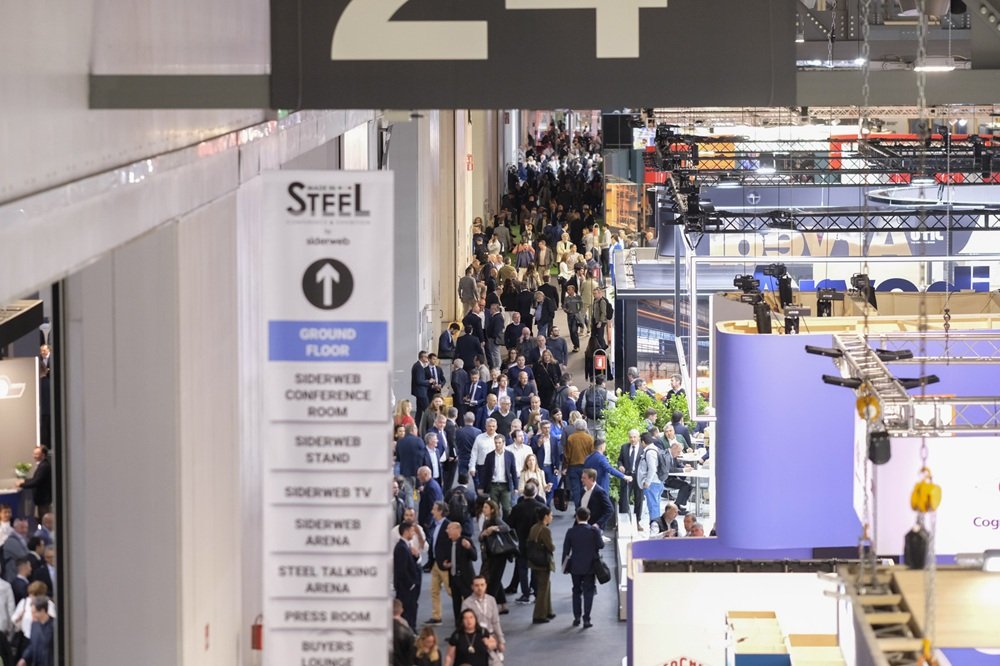
Registration is now open for the twelfth edition of the international Conference & Exhibition dedicated to the steel industry.
In a European market that is showing signs of stabilization after difficult years, the event confirms itself as a strategic platform for business and discussion between operators in the sector.
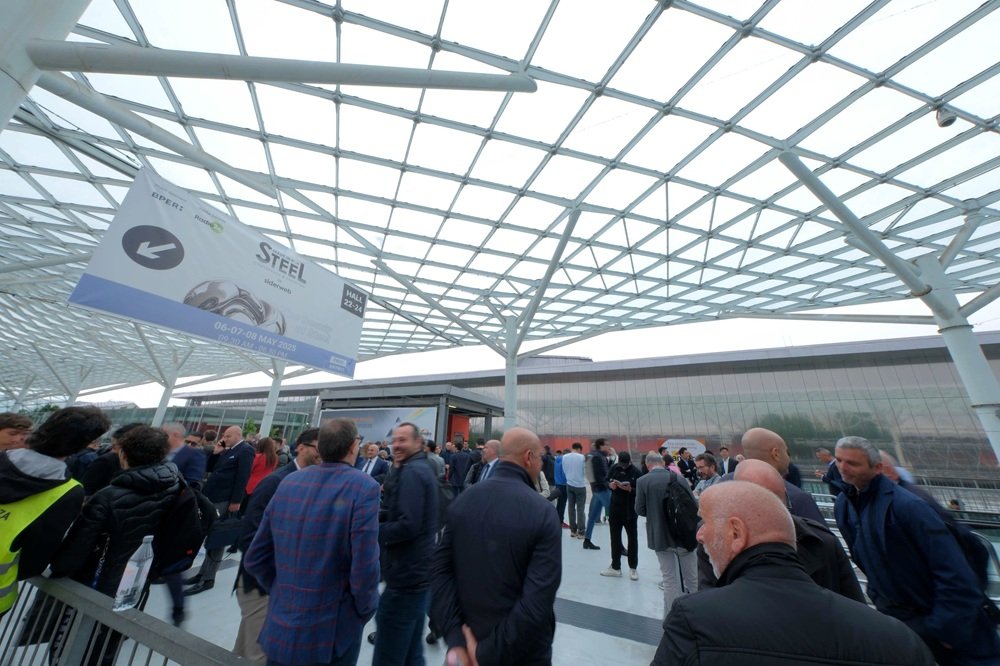
The exhibition space sales campaign for Made in Steel 2027 , the international event dedicated to the steel industry, has officially begun. Scheduled for May 11, 12, and 13 at Fiera Milano , the event is organized by siderweb in conjunction with Fiera Milano. Interested companies can reserve their space at an event that, year after year, has established itself as an international reference point for steel producers, distributors, traders, service centers, processors, and users. An "Early Bird" option will also be available for exhibitors who book by June 19.
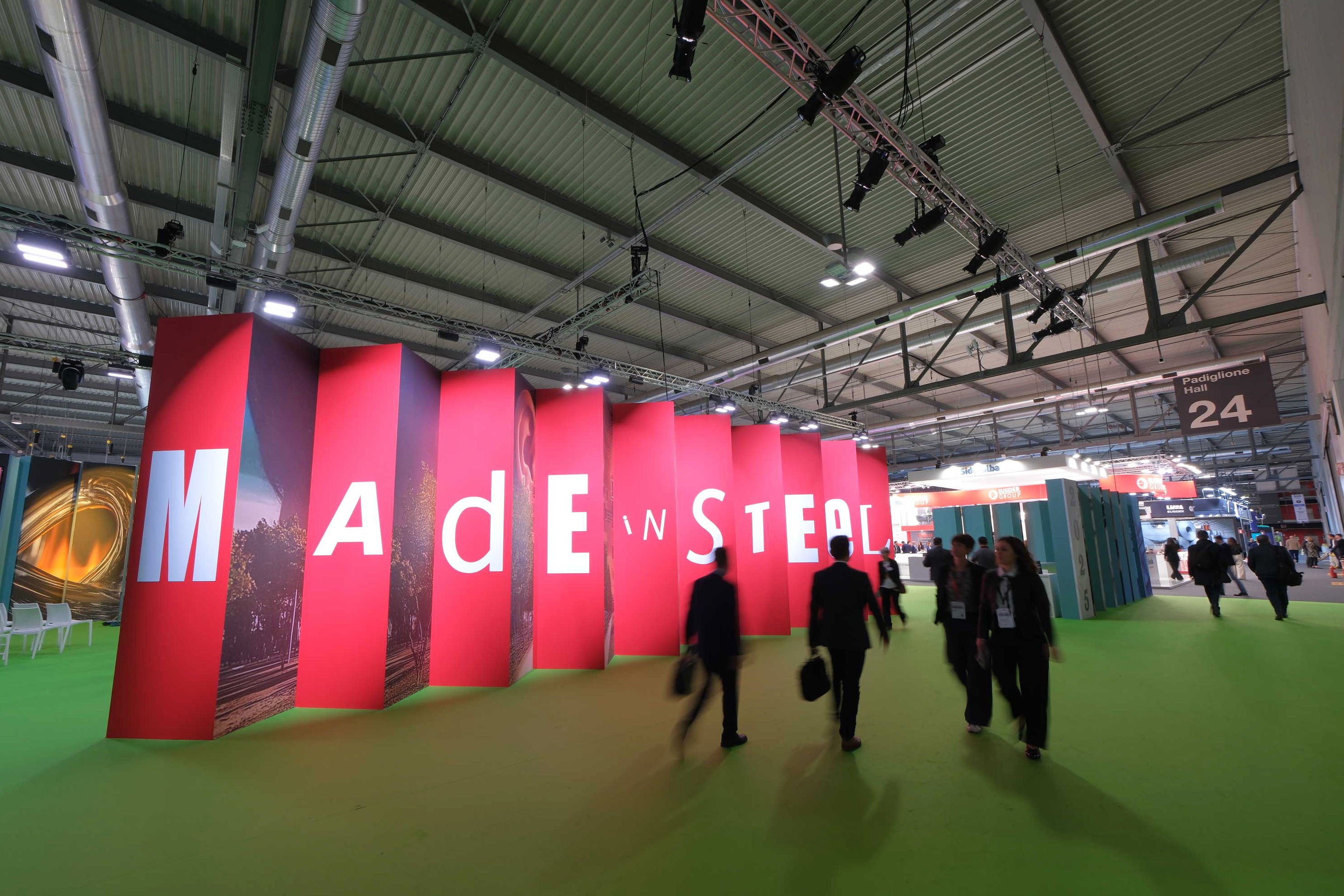
The twelfth edition of Made in Steel presents itself with a renewed layout and expanded spaces in pavilions 8, 12 and 16 , designed to welcome an ever-increasing number of companies and promote visibility, networking and business opportunities along the entire steel supply chain.
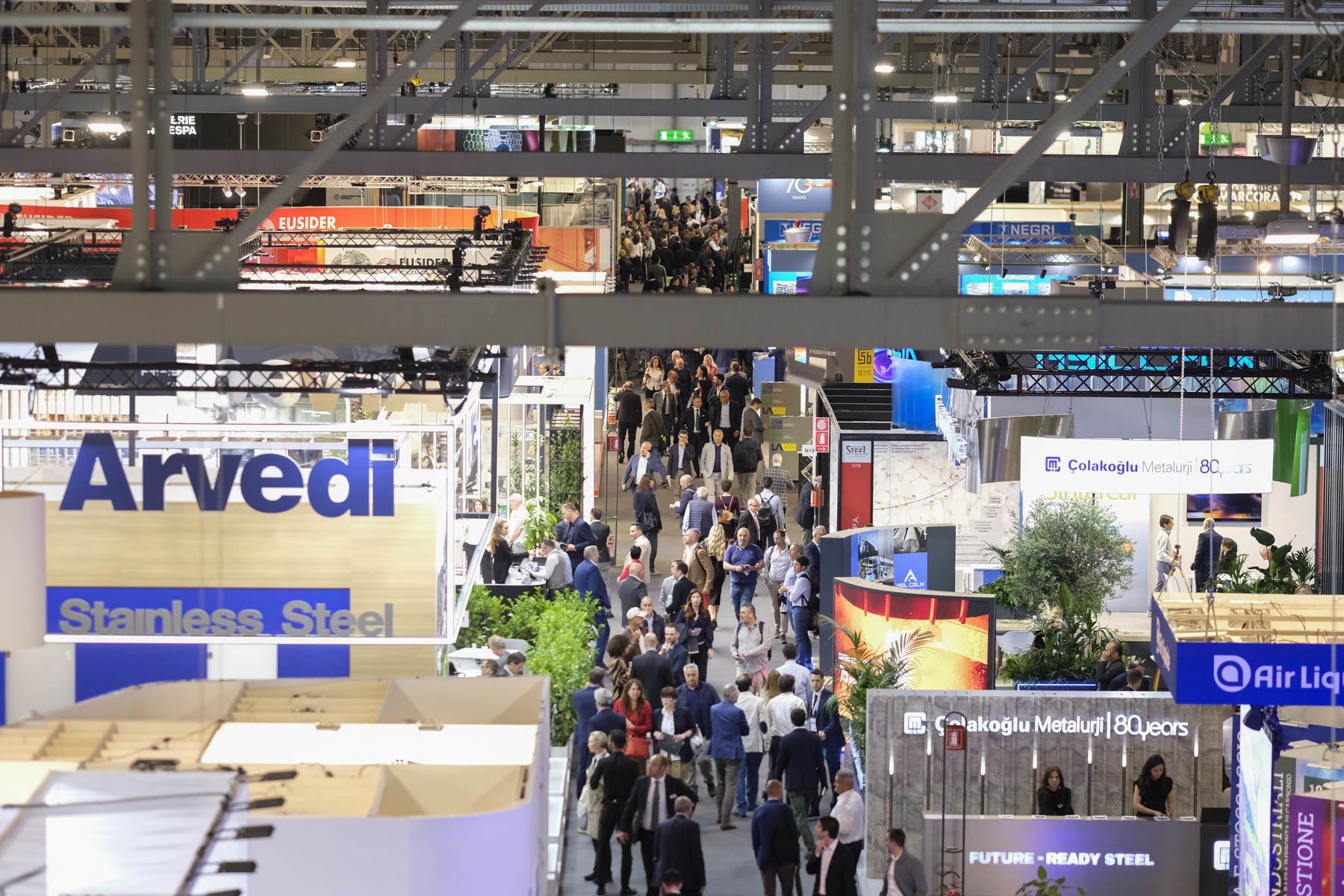
Following the growth of the 2025 edition, which attracted over 19,000 attendees and nearly 400 companies from all over the world, Made in Steel is looking to 2027 with the aim of further consolidating its role as a European platform for discussion, innovation, and development for the sector.
"The opening of sales represents the first step towards an edition that aims to position the Italian steel industry in an even more international and business-oriented context," said Made in Steel CEO Paolo Morandi. "In a period of profound transformation for the European steel industry, the biennial event aims to be a place where companies, institutions, and stakeholders can meet to develop new growth opportunities and jointly address the challenges of competitiveness and industrial transition."
In addition to the exhibition area, Made in Steel 2027 will also offer a rich program of conferences, round tables, and in-depth discussions dedicated to key topics in the steel industry: market dynamics, regulations, technological innovation, sustainability and the circular economy, geopolitics, and industrial competitiveness.
The market context: between first signs of recovery and new competitive challenges
The opening of registrations for Made in Steel 2027 comes at a particularly significant time for the European steel market.
After three consecutive years of declining demand, the sector is showing signs of stabilization, despite a still highly uncertain environment. According to Eurofer's latest Economic and Steel Market Outlook, apparent steel consumption in the European Union is expected to return to growth in 2026, albeit at a moderate pace, supported by a gradual improvement in industrial activity and investment. However, demand levels remain lower than those recorded before the pandemic, and factors such as high energy costs, geopolitical tensions, and growing competitive pressure from non-European imports continue to weigh on demand.
In Italy, the European Union's second-largest steel producer after Germany, companies in the supply chain are undergoing a transition phase that requires significant investments in energy efficiency, digitalization, and decarbonization. At the same time, strengthening strategic sectors such as construction, infrastructure, energy, and advanced manufacturing could help sustain demand in the coming years.
Made in Steel is the international conference and exhibition dedicated to the steel industry. It is organized by siderweb - the steel community alongside Fiera Milano. Made in Steel is a conference and exhibition. It offers opportunities for business and reflection, networking and learning. It is both an exhibition showcase and a cultural hub that, with conferences, forums, and roundtables, aims to foster competitive collaboration and the exchange of information, essential elements for business growth. Since 2023, Made in Steel has been certified for sustainable event design and management according to the ISO20121 standard.
siderweb - The Steel Community is the only online publication in Italy dedicated entirely to the steel industry. It is a point of reference for industry professionals, thanks to its simple style, focus on in-depth analysis, and objectivity. Since 2009, it has been tracking the prices of raw materials and steel products on the national market every week, now numbering over 60, using a method certified by the Laboratory of Statistics, Data, Methods, and Systems at the University of Brescia. Since 2022, it has published five weekly indices for scrap, carbon steel, long and flat products, and stainless steel.
Since 2005, it has organized Made in Steel, the international Conference & Exhibition dedicated to the steel industry, and structured its contents: conferences, interviews, and outlooks.
Not just another marketplace: a-z maschinenwelt launches its own online auctions of used machinery w
On auctionz.de, the Weinstadt-based machinery dealer will be auctioning exclusively machines he owns from September 2026 – the first auctions will end at the beginning of October. AZ Maschinenwelt GmbH, headquartered in Weinstadt near Stuttgart, is launching auctionz (auctionz.de), its international online auction platform for used industrial and production machinery, in September 2026. Unlike most auction portals, only company-owned machinery and equipment will be auctioned. With auctionz, AZ Maschinenwelt has consciously chosen not to act as a marketplace or intermediary for third-party sellers, remaining what it has always been: a machinery dealer with a personal relationship with its customers, who is personally responsible for its goods. The first auctions will close in early October 2026. TRANSPARENCY INSTEAD OF ANONYMITY Many auction platforms in the machinery trade operate as mere intermediaries. Buyers often don't know exactly who is behind the goods they're offering or who is responsible for any technical questions they may have. At auctionz, things are different: every machine offered has been personally inspected by the team, examined, photographed, and truthfully described. From the initial technical question to purchase and payment, through to disassembly, loading, customs documentation, and export management, buyers have a direct contact. Thomas Reichelt, managing director, AZ Maschinenwelt GmbH: The market doesn't need another platform where anyone can list anything. And that's exactly what we don't want to be. We remain machinery dealers: we buy the goods ourselves, we know our machines, and we personally answer for what we offer. With auctionz, we're simply using a new means to market machinery even more transparently and internationally—without sacrificing personal responsibility. Adnan Saeed, founder and managing director, AZ Maschinenwelt GmbH: We don't sell any machine we haven't seen with our own eyes. Thomas or I personally stand in front of every machine before it goes to auction. What we photograph and describe corresponds to the condition the buyer will find—that's what we want to be judged on. INSOLVENCY, CESSATION OF BUSINESS AND SURPLUS MACHINES The machines up for auction originate from insolvencies, company and plant closures, restructurings, and excess inventory, as well as from the purchase of entire machine parks and production sites by AZ Maschinenwelt. The offering is aimed at medium-sized manufacturing companies, international machinery dealers, workshops, and industrial end customers worldwide.• Conventional machine tools• CNC machines and machining centers• Complete production plants• Metalworking• Woodworking• Plastics technology• Measurement technique• Compressors and compressed air• Warehouse and factory logistics• Workshop and company equipment HOW AUCTIONS WORK Auctions are conducted entirely digitally. Upon request, an automated bidding agent will raise the bid up to the maximum amount set; if bids are placed shortly before the closing time, the auction is automatically extended. A 9 percent commission is added to the hammer price. Any disassembly and loading costs are shown separately and transparently, as are any transferred cost items, without any additional margin. Even after the auction has been awarded, AZ Maschinenwelt provides comprehensive support to its customers, upon request including the entire handling of BAFA paperwork, export, and customs documents, up to the machine's collection. PLATFORM LAUNCH: September 2026 FIRST AUCTIONS END : Early October 2026 FORMAT : Fully digital online auctions with bidding agent and automatic extension CONDITIONS : 9% commission on the hammer price; dismantling/loading as costs transferred without markup SERVICES : Personal contacts; BAFA, export and customs management up to collection URL : www.auctionz.de WHO IS AZ MASCHINENWELT? AZ Maschinenwelt was founded in 2011 by Adnan Saeed and has operated as a limited company since 2025, headquartered in Weinstadt near Stuttgart. The company trades in used industrial and production machinery internationally, handles complete company liquidations, and handles disassembly, logistics, and warehousing. Approximately 20 employees work at the Weinstadt (administration) and Weilheim an der Teck (warehouse and showroom) locations; sales are conducted in Europe, North America, Asia, and other global markets. Since January 2025, Thomas Reichelt has led the company alongside Adnan Saeed. Further information is available at www.az-maschinenwelt.com and www.auctionz.de.
 Industriale.it certification