Why it's time to rethink your tooling costs.

Yayınladı 15/01/2026
Why it's time to rethink your tooling costs.

Introducing Pay per Part

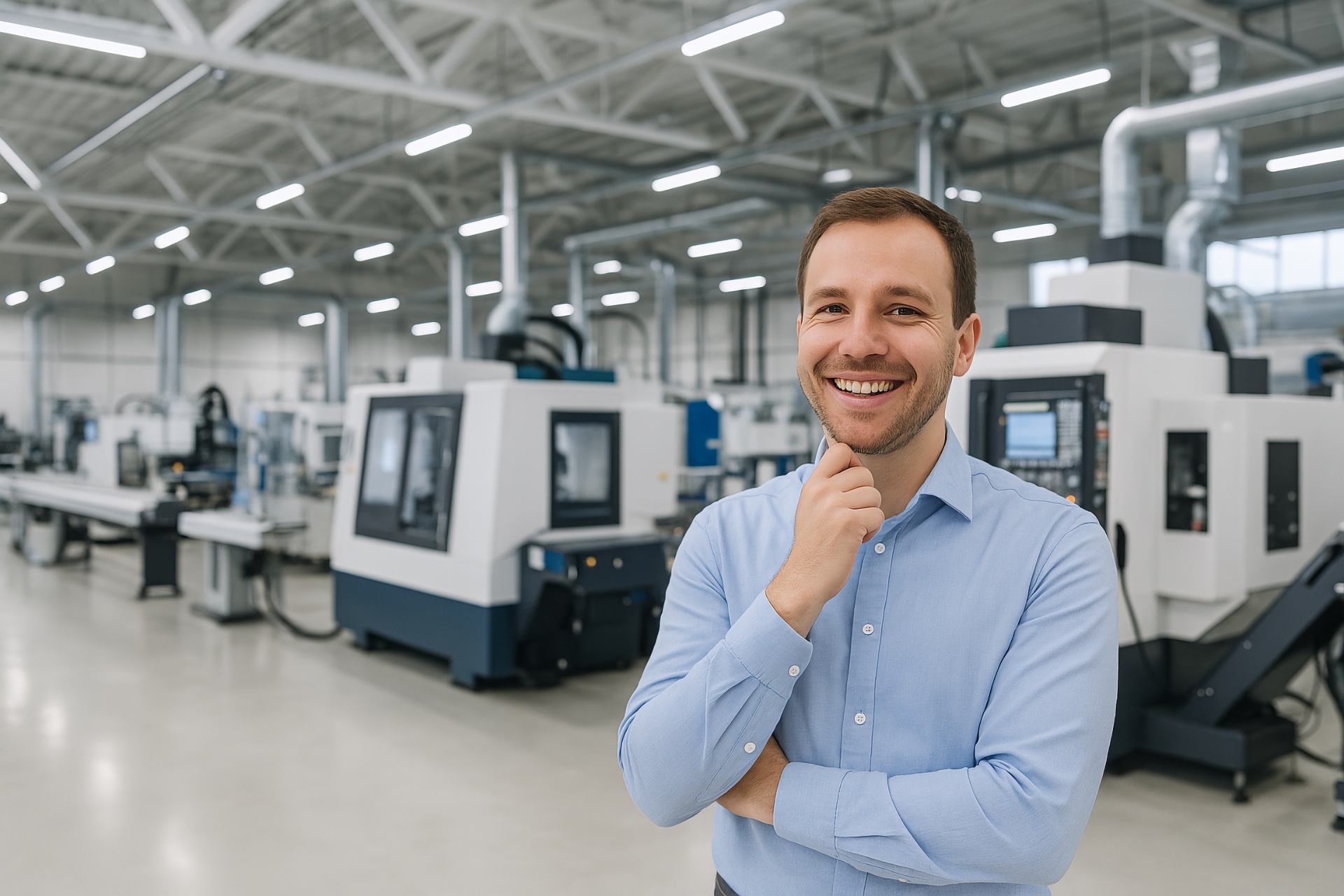
Imagine producing components in repeat batches and focusing solely on delivery instead of managing tooling sourcing, logistics, and performance issues. No replenishment or quality concerns, and no last-minute panic when you realize you're out of the tools you need to complete the job. Today, manufacturers can't afford to be overwhelmed by paperwork that slows down productivity. As Johan Huss, Vice President Digital Products and Services at Sandvik Coromant, explains, the future lies in business models that reduce complexity on the shop floor and directly link costs to actual productivity.

Forty-four percent of engineers spend at least six hours a week dealing with procurement issues, according to Fictiv's latest State of Manufacturing report, which found that 19 percent of engineers surveyed spent more than eight hours a week (a full working day) on procurement activities in 2025. This percentage is up from 13% in 2024, underscoring the growing burden on teams managing an increasingly complex supply chain.

But it's not just the time spent ordering new tools that's at stake. Research by Sandvik Coromant shows that, although tooling represents only 3-5% of total production costs, its poor management negatively impacts many other areas, leading to operator downtime, scrap, and emergency purchases. In fact, up to 20% of an operator's time can be wasted simply searching for the right tool, a prime example of how small setbacks can add up very quickly.

This data also highlights another need: manufacturers need more efficient service and technology-based procurement solutions that streamline workflows and allow teams to focus on higher-value activities. 

Outcomes matter more than production volumes
This is where outcome-based models can make a tangible difference, especially for those working in high-volume machine shops. Production rates.

Let's start by examining how a typical procurement process works. It begins with scheduling a batch of parts, so the first thing to do is check tooling availability. Now, imagine inventory is running low and an engineer or purchasing representative needs to place a purchase order, perhaps from multiple suppliers. Replenishment times will need to be tracked, deliveries monitored, and invoices reconciled. In many cases, teams hold "emergency" inventory that ties up capital and takes up warehouse space.

For a fast-paced machine shop, this cycle repeats endlessly, stealing valuable production time that could otherwise be used to improve processes or solve design challenges. This is where outcome-based models can literally turn this tooling strategy on its head. Instead of purchasing tools as consumables, manufacturers pay a fixed cost for each finished component.

The "pay-per-use" model works like shopping at the supermarket: the buyer pays only for what he uses. Thus, manufacturers pay for a service or product based on how much they will use it, rather than paying a fixed fee. In other words, if a machine shop uses more, it will pay more, and vice versa. It's an efficient and flexible way to access services or products.

At Sandvik Coromant, the Pay per Part service was designed to remove any complexity from the machining processes and offer customers maximum transparency into their production costs. The first phase consists of a detailed analysis of the customer's situation, where the team takes the time to understand their business objectives and review their existing tooling strategy to identify areas for improvement.

This may reveal, for example, that there are too many tools in stock or that a lot of valuable time is wasted searching for the right tool for the entire shop. With this analysis, Sandvik Coromant experts can develop a tooling strategy tailored to the customer's components and challenges. This includes selecting the most efficient tools, setting the right process parameters, and integrating digital solutions to ensure transparency and monitor performance.

Keyly, the result is a fixed cost per component, offering the customer significant benefits in terms of predictability and control. Instead of managing tool costs separately or worrying about unexpected downtime, every aspect of the manufacturing process fits into a single, reliable cost structure.

A partner for real results 
The advantages of this model are clear. Costs become transparent and predictable, with no unexpected expenses. Daily operations are simpler because less time is spent managing tools, which benefits production. Process reliability improves, resulting in reduced downtime and scrap, while a commitment to continuous optimization delivers tangible savings year after year.

The "pay-per-use" model also promotes sustainability, as tool reconditioning, reduced packaging, smarter logistics, and longer tool life all help eliminate waste and reduce environmental impact.

The service is not static but committed to continuous optimization, with gradual updates to improve tool life, process stability, and overall efficiency. By combining advanced tooling expertise with continuous, data-driven refinements, the Pay per Part model ensures production that is not only reliable but also increasingly efficient over time.

With Pay per Part, Sandvik Coromant not only provides tools but also offers time and stability, positioning itself as a partner for concrete results. Manufacturers will have the security of knowing that each component will be produced with guaranteed quality and at a fixed cost, while the complexities of tooling, logistics, and optimization will be managed by dedicated experts, ensuring production is always at the highest levels.

Today, manufacturers cannot risk being overwhelmed by administrative procedures. On the contrary, they need a model that recognizes their needs and offers value-oriented support, specific to their performance, starting with tool logistics and the choice of a partner capable of supporting them in a predictable, transparent and intuitive way, leading to increasingly profitable production.

For more information on Sandvik Coromant's Payment per Part service, visit the website.
Sandvik Coromant
Together with customers and partners, Sandvik Coromant paves the way to a sustainable future and provides tooling solutions to the mechanical engineering industries from around the world. Over eighty years of practical experience have allowed us to accumulate a wealth of knowledge in metal cutting and processing. This expertise transforms every challenge into an opportunity for innovation, collaboration, and cutting-edge solutions. Our goal is to pursue positive change by promoting sustainability, efficiency, and growth to shape a future where innovation is at the forefront. Part of the global industrial engineering group Sandvik, Sandvik Coromant is committed to building the future, together with its customers.

Daha fazla bilgi için: Sandvik Coromant

İlginizi çekebilecek diğer makaleler

Auma at ivs 2026: electric actuation technologies serving a changing industry

AUMA Italiana, a national and international point of reference for electric actuation solutions for industrial valves, will participate in the sixth edition of IVS - Industrial Valve Summit , scheduled to take place at the Bergamo Fair from 19 to 21 May 2026. IVS is now much more than a trade show: it's the place where the entire industrial valve and flow control supply chain meets to discuss ongoing transformations, from new energy scenarios to plant digitalization. In this context, AUMA Italiana confirms its presence to actively contribute to the dialogue between valve manufacturers, EPCs, and end users, placing application experience and technological vision at the center. During the three-day Summit, AUMA will have its own exhibition space to meet with customers and partners and present electric actuation solutions designed to make systems more reliable, efficient, and future-proof . These technologies go beyond valve actuation to integrate advanced diagnostics, communication, and maintenance support features, simplifying the daily work of those managing complex systems. The key themes at IVS 2026, from artificial intelligence to applications for hydrogen, renewables, CCUS, and nuclear power, reflect a rapidly evolving industry. It is precisely in this context that electric actuation is taking on an increasingly strategic role, becoming a key element in ensuring operational safety, service continuity, and intelligent process control. AUMA Italiana will bring to the trade fair its expertise, developed over decades of field applications, in sectors where precision and reliability are not an option but a necessity. "IVS is a valuable opportunity to engage directly with the entire industry community," comments Andrea Villa , Managing Director of AUMA Italiana. "Being present means listening, sharing experiences, and contributing to the development of solutions that increasingly meet the industry's real needs." With a global presence and a strong focus on research and development, AUMA continues to invest in technologies that can drive the evolution of the valve industry, supporting customers and partners on a journey of concrete innovation, long-term reliability, and a focus on sustainability. AUMA awaits you at IVS - Industrial Valve Summit 2026, Hall A - Stand 32 , to meet, exchange ideas and discuss the future of industrial valve automation.

23/04/2026 Devamını oku

Strategic use of ceramics in cast iron processing

Productivity and process stability engineering in cast iron processing. With the global manufacturing industry under increasing pressure from volatile raw materials and concentrated supply chains, many machining operations are reevaluating how critical tool materials are used in their processes. Tungsten-based carbide remains indispensable in a wide range of applications. However, its dependence on tungsten—a strategically sensitive raw material—is forcing manufacturers to reexamine where this material offers the greatest value and where alternative materials can provide tangible technical advantages. Thanks to its extensive experience in ceramic materials engineering and application development, NTK improves the performance of cutting tools in the most demanding environments. In cast iron machining, these ceramic grades represent one of the most durable solutions for high-temperature applications. Where ceramics offer a technical advantage Machining cast iron generates extremely high temperatures at the cutting edge, especially during dry machining and at high cutting speeds. Under these conditions, aluminum oxide and silicon nitride ceramics maintain hardness and wear resistance beyond the limits of conventional carbide. In stable operations dominated by thermal loads, ceramics allow: higher cutting speeds reduced cycle times uniform abrasive wear in cast iron reliable performance in dry machining These advantages are based on the principles of materials science and are confirmed in production environments where thermal resistance determines tool life. Strategic distribution of cutting materials Ceramics are not destined to replace carbide in all operations. Carbide continues to excel in operations with severe interruptions in cut, low-rigidity setups, and applications requiring maximum edge toughness. The opportunity lies in identifying operations where thermal loads predominate over mechanical shocks. Under these conditions, ceramic grades can offer significant productivity improvements, while carbide remains the ideal solution when toughness is crucial. This targeted approach improves overall process efficiency and reduces dependence on a single cutting material. NTK ceramic solutions for cast iron processing The NTK ceramic range has been specifically developed for the machining of cast iron: SP9 - Coated silicon nitride grade for roughing to finishing operations on grey and ductile iron SX6 - High toughness silicon nitride ceramic for demanding roughing on gray cast iron, even on surfaces with fusion crust HC1 / HW2 - Aluminum oxide ceramics optimized for high-speed finishing of gray cast iron These grades are widely used in the automotive, heavy machinery, pump and valve components, and industrial casting manufacturing industries. Real-world production cases demonstrate significant increases in cutting speeds and productivity in components such as wheel hubs and structural casings, where ceramic grades have successfully replaced carbide in selected operations. Efficiency in large-scale production Higher cutting speeds reduce machining time per component and improve spindle efficiency in high-volume production. In many cast iron machining applications, ceramic tools can operate dry, reducing or eliminating the use of coolant. In addition to the productivity benefits, this approach reduces energy consumption per part and reduces the need for cutting fluid management and disposal, contributing to more resource-efficient production. Engineering the process The adoption of ceramic tools in cast iron processing is not a simple replacement, but an intelligent application. Aligning tool material properties with the predominant stresses of each operation—thermal or mechanical—allows for the development of a more targeted, performance-oriented machining strategy. When applied under the correct conditions, advanced NTK ceramic grades increase productivity while maintaining process stability in the most demanding cast iron machining operations. About NTK Cutting Tools NTK Cutting Tools, a member of the IMC Group, is a global supplier of advanced cutting tool solutions for the metalworking industry. The company is recognized for its expertise in ceramic tools for high-temperature machining and as a specialist in micromachining and Swiss-type machining applications, where precision and process stability are crucial. With a wide range of cutting tool solutions, NTK helps manufacturers increase productivity, ensure process stability, and improve resource efficiency in highly demanding industries, including aerospace, automotive, medical, electronics, and general engineering.

23/04/2026 Devamını oku

Redefining precision, power and productivity: the makino a500ir

The Makino a500iR, equipped with a brand-new 60 kW spindle at 24,000 rpm, was presented at EMO 2025 in Hannover. This spindle ensures extremely short cycle times in the machining of aluminum aerostructures and in the most complex applications in the semiconductor industry. Designed for precision, speed and reliability This latest addition to the Makino horizontal machining center range was designed to meet the growing demand for high-performance 5-axis simultaneous machining. Engineered for precision, speed, and proven reliability, this cutting-edge machine combines robust design with intelligent features to deliver exceptional results on a wide range of materials and applications. The a500iR was developed for the ultra-efficient machining of small and medium-sized complex components, particularly for aerospace applications. It accommodates 500 x 500 mm pallets and offers axis travels of 900 mm (X), 750 mm (Y), and 800 mm (Z). The machine's exceptional machinability is due, among other things, to its undercut capability with 290° rotation (-110° to +180°) on the B-axis and continuous 360° rotation on the C-axis. Outstanding features • Superior Cutting Performance : Spindle options meet a wide range of machining needs, ensuring superior cutting performance for a wide range of applications: - Standard spindle: 14,000 rpm, HSK-A63 interface, motor power 63/30 kW (S3 ​​15%ED/S1), torque 303/120 Nm (S3 15%ED/S1). - Optional spindles: 24,000 rpm with HSK-A63 interface and 60 kW motor power. • Machining Capability : The a500iR enables stable, high-speed 5-axis machining: - B-axis: rotation from -110° to +180°; C-axis: continuous 360° rotation - Rapid feed rates up to 60,000 mm/min (linear), 16,000 degrees per minute (B-axis) and 36,000 degrees per minute (C-axis) - Maximum workpiece dimensions: ø 900 mm, height 600 mm and up to 400 kg • Chip and Coolant Management : The a500iR features an efficient chip and coolant management system with a central chip evacuation tank, multiple cooling systems (through the spindle, nozzles, cascade in the work area and C-axis) and a GI cut-off function to prevent chip wrap and tool wear during hole machining. • Tool Management : The a500iR boasts advanced tool management features, such as: - Standard 90-tool ring-type Automatic Tool Changer (ATC) and optional matrix-type ATC for up to 313 tools - Broken Tool Detection Sensor (BTS) via camera - Coolant recovery system to avoid excess coolant during tool changes • Ergonomic operability : Designed for ease of use and efficient ergonomic operability, the a500iR features a horizontal configuration with vertical grip pallets, easy access for loading and unloading (pallet height 1,100 mm) and hydraulic/pneumatic pass-through pallet locking in automated operations. • Specifications : The a500iR has a footprint of 3,540 x 5,981 mm, is 2,989 mm high, weighs 16,000 kg and can be optionally equipped with oil mist collectors, coolant temperature control, 3D tool compensation and other useful features.

23/04/2026 Devamını oku
Bültenimize abone olun
Endüstriyel dünyanın en son haberleri hakkında güncel kalmak için
Haber bülteni görseli L’industriale
Dati Legali

L'industriale s.r.l.
P. IVA: 12212870153
Codice Fiscale: 12212870153

Sede Legale

Via Carlo Dolci, 32
20148 Milano (MI)
Italy

Registro Imprese

Iscrizione R.I.: 12212870153
REA: MI-1539011
Capitale sociale: Euro 10.400,00 i.v.

Top
This website is protected by reCAPTCHA, therefore the Google privacy policy and terms of service apply.