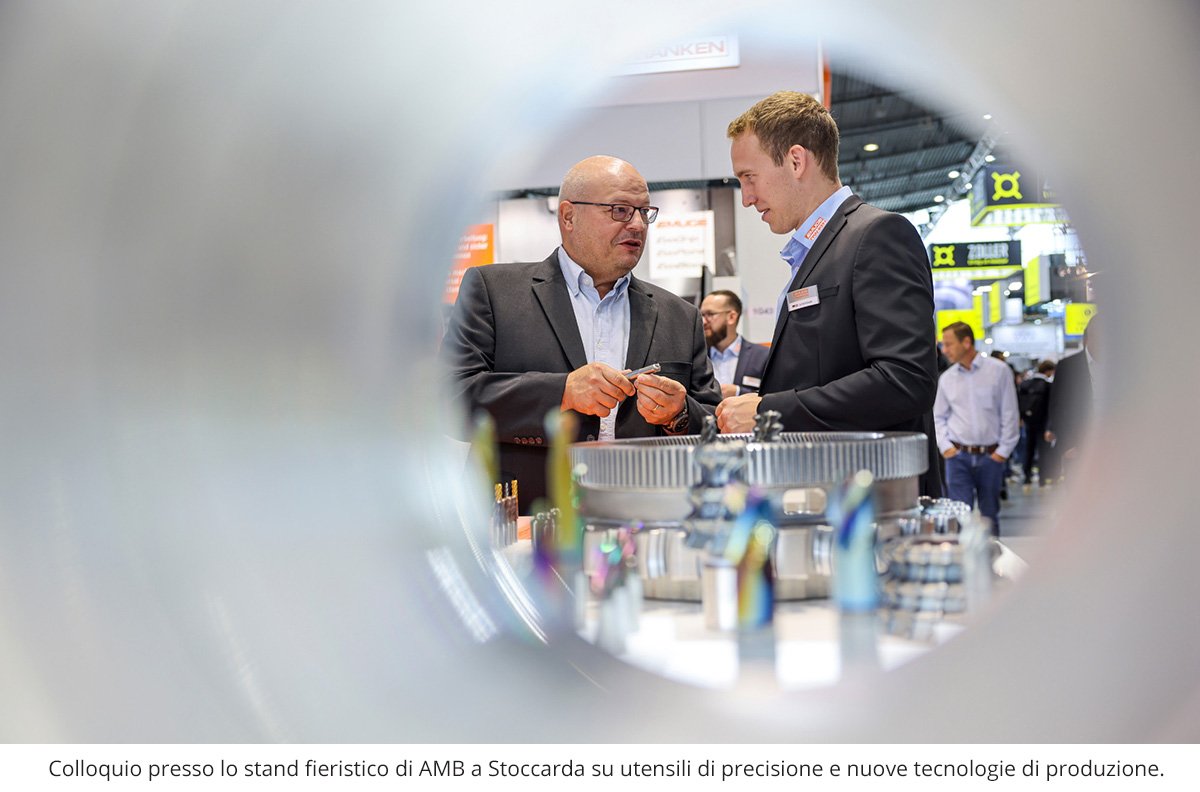
Sustainability, digitalization and automation: the key topics of AMB // AMB 2026 will also focus on the exchange of ideas and current developments
"Where metal comes alive": with this new slogan, AMB opens its doors in Stuttgart from September 15 to 19, 2026. Across all ten exhibition halls, AMB offers a comprehensive overview of current technologies and highlights industry trends such as sustainability, digitalization, and automation. These concepts are brought to life through concrete application examples: sustainability is presented in the context of recycling and the circular economy, while in digitalization, the fair focuses on artificial intelligence in manufacturing, and collaborative processes serve as a vivid example of modern automation.
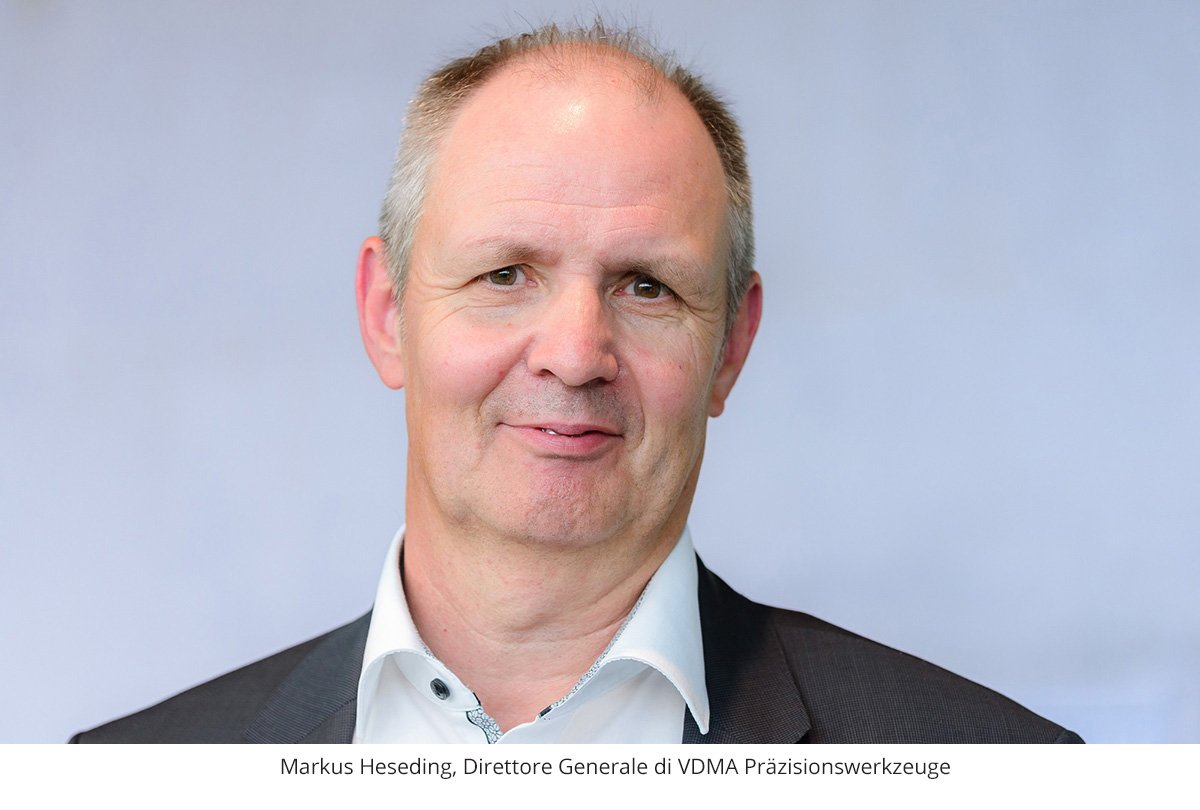
We delve into one of these topics in a conversation with Markus Heseding , General Manager of VDMA Präzisionswerkzeuge : we talk about the circular economy, carbide sourcing and tool recycling, as well as the role of AMB 2026 as a reference event for the sector.
Messe Stuttgart: Mr. Heseding, in your opinion, what will shape the sustainability debate in 2026, and what are the most important topics for the VDMA in the recycling sector?
Sustainability has become a strategic economic factor. In 2026, the challenge will be to reconcile environmental responsibility, security of supply, and competitiveness. For the precision tools industry, three issues are clearly central: the recycling and return of tool packaging, the sourcing of hard metals for the metalworking industries, and the Product Carbon Footprint as a basis for transparent and comparable CO2 data.
Messe Stuttgart: In the following interview, we'd like to focus on the first two points. You've always emphasized that every gram of carbide remaining in Europe is an asset. What specifically is needed to keep tungsten in the European supply chain, and where can the industry start?
Competition for tungsten is increasing globally, especially because other sectors, such as the defense industry, are significantly expanding their demand. At the same time, Europe has very few primary tungsten mining projects, and our heavy dependence on Chinese supplies is risky.
This is currently leading to significantly rising costs, a lack of price stability, significant supply uncertainty, and a complete lack of predictability. This is particularly critical because carbide tools are key components in the metalworking industry, in virtually all machining processes.
In this context, recycling is becoming even more important. Carbide recycling in Europe has been an environmental and economic success for decades. Europe therefore needs resilient supply models that combine the circular economy, technological innovation, and fair industrial partnerships.
This is why keeping tungsten in the European cycle is so crucial. Carbide scrap is a strategic resource: every gram that remains in Europe strengthens our industrial sovereignty. In recycling, we need more effective take-back systems, higher collection rates, and consistent quality standards. Our customers can also make a significant contribution by selling their carbide scrap to European partners. Our motto: "Those who commit to the European cycle remain strong in the tool technology sector!"
Messe Stuttgart: In addition to tungsten recovery, the question of how to successfully market tool packaging made from recycled materials is increasingly emerging. What steps are needed to effectively promote the use of recycled materials in the metalworking industry? What are the main objectives of your packaging recycling working group?
When using recycled materials, technical feasibility is rarely the issue. The challenge lies in the fact that tool packaging has a low market value, and recycling is often difficult to demonstrate as an economically viable activity. Additional obstacles include scalability, availability, and consistent quality standards. It is particularly important to collect sufficient quantities of pure material for reliable production.
In the VDMA "Tool Packaging Recycling" working group, we collaborate with partners along the value chain to find viable solutions. A field trial has implemented, for the first time, a functioning system for the return and recycling of used packaging made from post-consumer recycled material, which is then tested and reprocessed. This creates a valid basis for a closed-loop system.
Today, pioneering companies already offer tool packaging made entirely from recycled materials: some manufacturers have already completed the transition. These solutions will be clearly presented at AMB 2026.
Messe Stuttgart: How can these three topics—hard metal recycling, recycled packaging, and CFP—be highlighted at AMB? Which practical initiatives or projects will VDMA focus on in 2026?
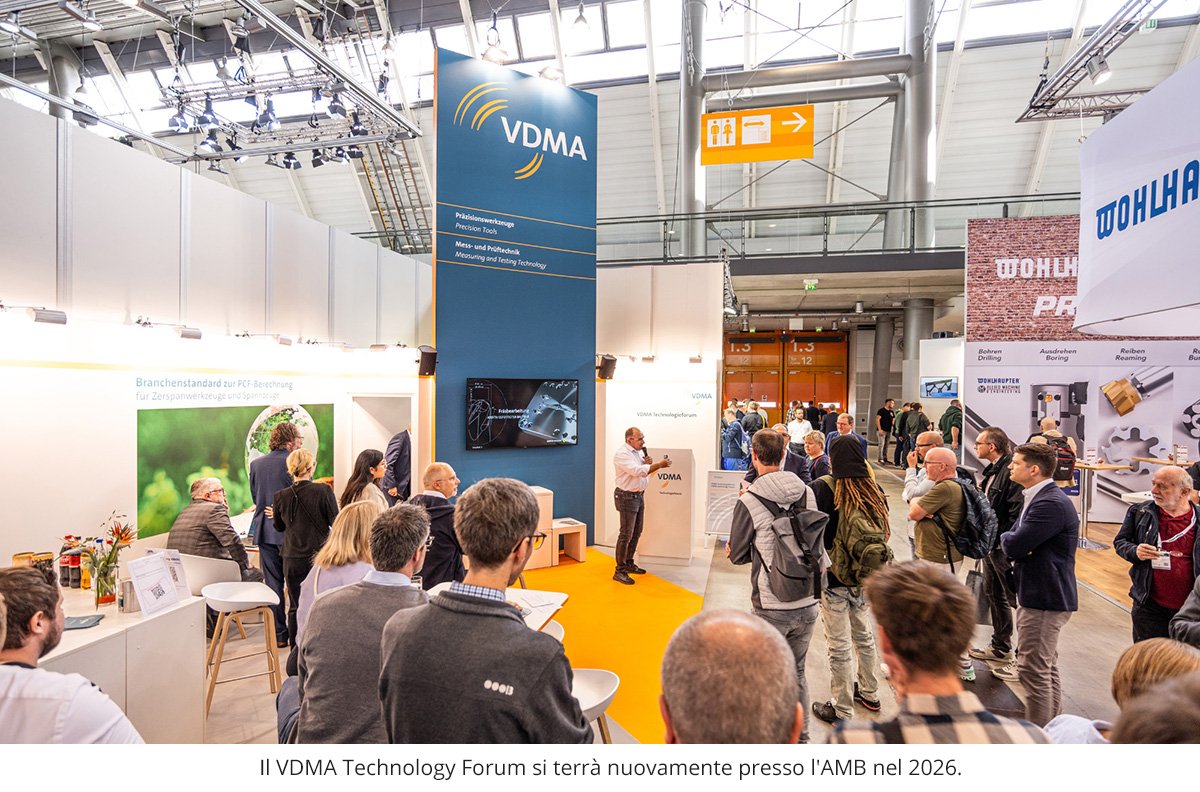
Many companies will be presenting their latest developments at AMB, making the trade fair particularly interesting. We will also be exploring this aspect in depth at the VDMA Technology Forum, at booth B50 of the L-Bank Forum (Hall 1). We will demonstrate how sustainability, the circular economy, and digitalization can be concretely implemented in the precision tools industry. Digitalization supports these topics through transparent material flows, digital documentation, and standardized processes along the entire value chain. Numerous VDMA member companies and research partners will be presenting their solutions. We will also be showcasing the cutting-edge results of our recently completed research project on increasing the efficiency of hard metal recycling.
Messe Stuttgart: To what extent can AMB, as a leading trade fair for the industry, accelerate the exchange and development of solutions to these challenges? What role do cross-industry dialogue and personal interaction play at AMB?
One advantage is that AMB brings together the entire metalworking process chain. The majority of visitors will come from Germany, the beating heart of the industry. Equally important will be the international visitors, who traditionally come in large numbers from Switzerland, Austria, and Italy, but also from the Netherlands, France, Sweden, the Czech Republic, and Turkey. AMB excels at bringing together technological innovation, international reach, and the entire industrial production process chain.
Especially in a period when the industry is simultaneously subjected to economic, geopolitical and industrial policy pressures, this exchange is indispensable.
We all hope that AMB can provide a significant economic boost. It's a place where companies can evaluate investments in future technologies, experiment with new applications, and strategically position themselves for the next stages of development.
About AMB
Since 1982, AMB has presented the highlights of the international metalworking industry. "Where metal comes alive": It will also be a permanent fixture on the industry's agenda in 2026, this year from September 15 to 19. It is the international marketplace and meeting place for metalworking, showcasing the latest products, technologies, innovations, services, and concepts in all their facets. AMB is supported by sponsors VDMA Präzisionswerkzeuge, VDMA Software und Digitalisierung, and VDW Verein Deutscher Werkzeugmaschinenfabriken e.V. (German Machine Tool Manufacturers' Association).
 Industriale.it certification